
A New Beginning
By shielding Israel from pressure and isolation, President Trump made it clear that the only acceptable outcome for the conflict was one where Israel’s enemies were defeated.
Ottolenghi, E. (2025). A New Beginning. CENTEF. https://centef.org/research-publication/a-new-beginning/
By shielding Israel from pressure and isolation, President Trump made it clear that the only acceptable outcome for the conflict was one where Israel’s enemies were defeated. This show of steely resolve, alongside Israel’s remarkable military accomplishments, delivered the Gaza deal. Even if it fails to produce a lasting solution to the Israeli Palestinian conflict, it has already transformed the Middle East.
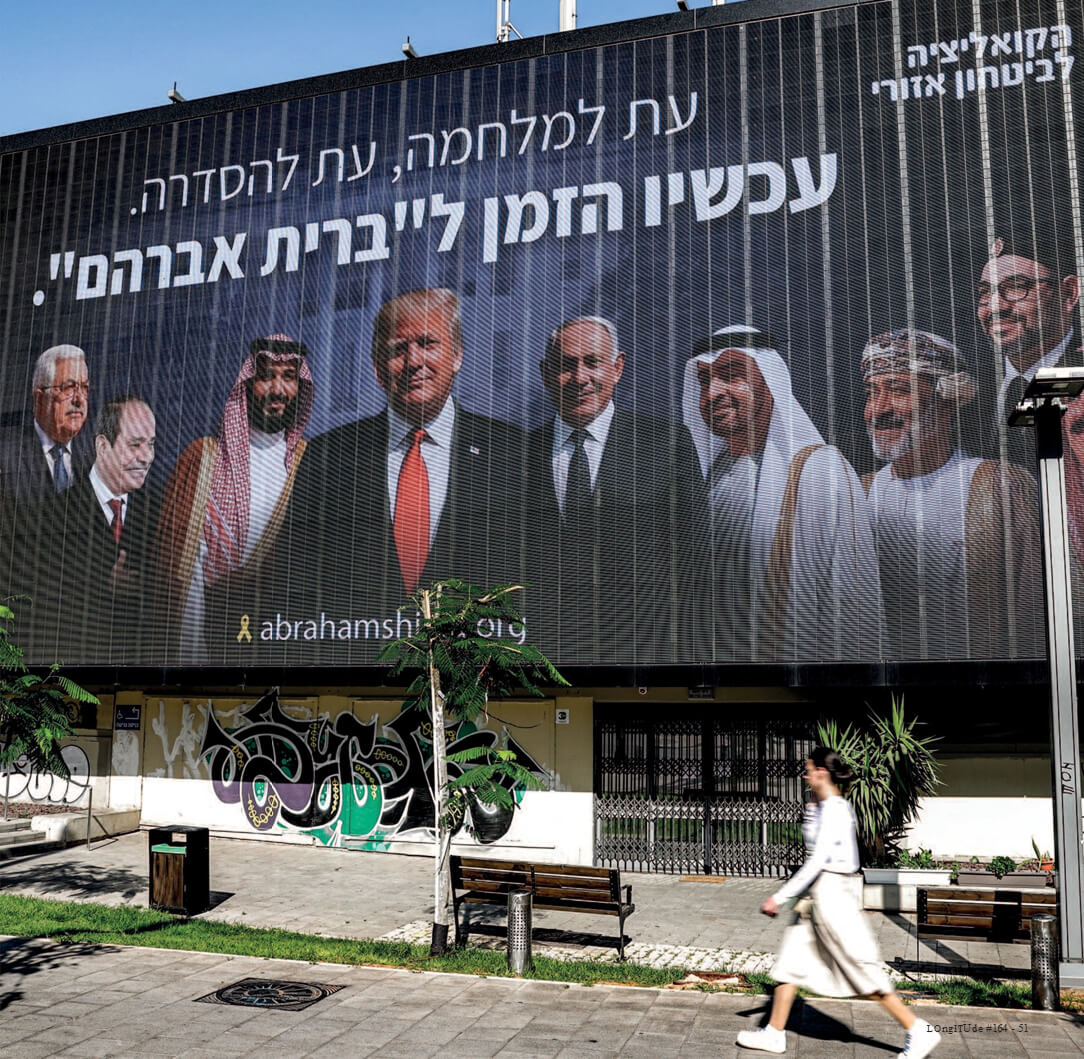
A billboard, put up by the Coalition for Regional Security, displayed in Tel Aviv on June 26, 2025
Since he took office in January 2025, US President Donald Trump has styled himself as an effective peacemaker. His foreign policy has been a mixture of bombast, arm twisting, out of the box thinking, and the combination of economic incentives, military pres-sure, and diplomatic openings. The Middle East, an area of chronic instability, has potentially been Presi-dent Trump’s greatest diplomatic achievement so far, crowned by a peace plan to end the Gaza war that, if successful, is a game changer for the region. But even if it fails to produce a lasting, comprehensive solution to the Israeli Palestinian conflict, Trump’s foreign pol-icy has already transformed the Middle East.
On September 29, 2025, President Trump announced a 20-point peace plan to end the war between Israel and Hamas. Less than two weeks later, the first phase of the plan went into effect. Israel redeployed its forces along a mutually agreed boundary that leaves Israel in control of 53% of the Gaza Strip and released hundreds of convicted Palestinian terrorists. Hamas, for its part, released all remaining Israeli living hostages and began to turn over the remains of dead hostages. The conflict is over, for now, and the Trump plan offers a road map to turn the ceasefire into a comprehensive po-litical arrangement for the future. Importantly, the agreement, in so far as it will be implemented, creates a multilateral structure to transition Gaza both politically and economically through the direct involvement of US aligned regional powers and Muslim countries and it creates a broad horizon of political and eco-nomic cooperation between Israel and the Muslim world that, if successful, would cement the Abraham Ac-cords and expand them to countries such as Indonesia and Pakistan, alongside Saudi Arabia.
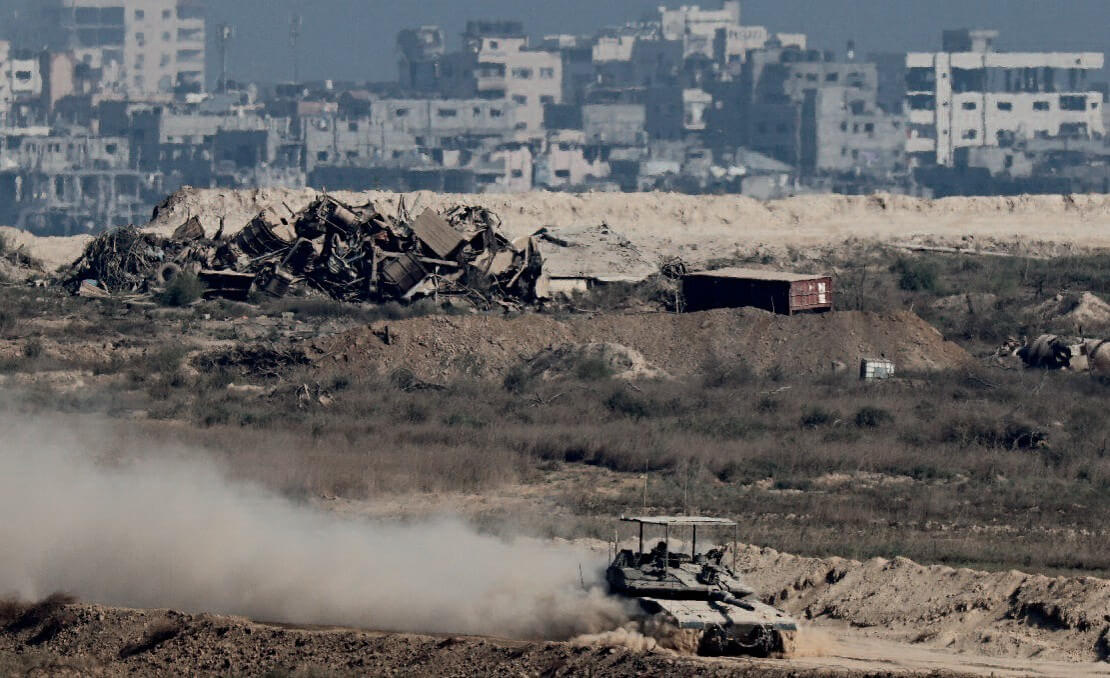
An Israeli tank maneuvers in Gaza, as seen from the Israeli side of the border, September 28, 2025.
How this came about is important. This outcome is the result of the implacable logic of war. It was Israel’s resolve to fight to the finish, with the full backing of the US administration, that changed the face of the region. The diplomacy that ensued was the result of military achievements on the ground, not the product of diplomatic pressure, international boycotts, or civil society mobilization against Israel across the Western world.
There are important caveats to the peace overhead the White House promoted at the Sharm El Sheikh summit that followed the beginning of the ceasefire and President Trump’s visit to Israel: Hamas has al-ready violated the truce by failing to return all hostages at once – as of the time of writing, the bodies of 13 de-ceased hostages still remain held by the terrorist group. Hamas has also made it clear it does not intend to dis-arm and it expects to continue to play a role in Gaza’s future governance; and within hours of the ceasefire its militia has emerged from its vast tunnel network to re-assert control of territory Israeli forces withdrew from, to conduct a campaign of intimidation and terror against opponents, many of them accused collaborators, which Hamas publicly executed by the hundreds.
Beyond the first phase of the agreement – ceasefire and the release of Israeli hostages – there remain many unknowns: there is reluctance among Arab countries to contribute their personnel for the future International Stabilization Force the agreement seeks to establish to oversee Hamas’ disarmament, the demilitarization of the strip, and interim security. Politically, a rift has already emerged among Arab states out of a concern that President Trump might give an oversized role to Qatar and Turkey – Islamist regimes who have backed Hamas and will seek to shield it from being neutralized. The plan to create a transitional government will have to contend with cross-purpose vetoes from Hamas, the Palestinian Authority, and Israel. There remains uncertainty about who will continue to be responsible for aid distribution – with Israel and the United States firmly opposing any future for UNRWA, the UN agency responsible for Palestinian refugees, whose failings and complicity with Hamas have become impossible to ignore. There also remains con-siderable anarchy in the Strip: armed clans and militias – some by Israel – have asserted authority over small patches of territory, and the longer it takes to establish and deploy international troops with a clear UN man-date – a requirement for many countries to partici-pate – the situation on the ground could become more, not less complicated. Reconstruction depends on sta-bility and security, and their absence could mean con-siderable delays – much of the Strip could remain un-inhabitable for months, maybe years.
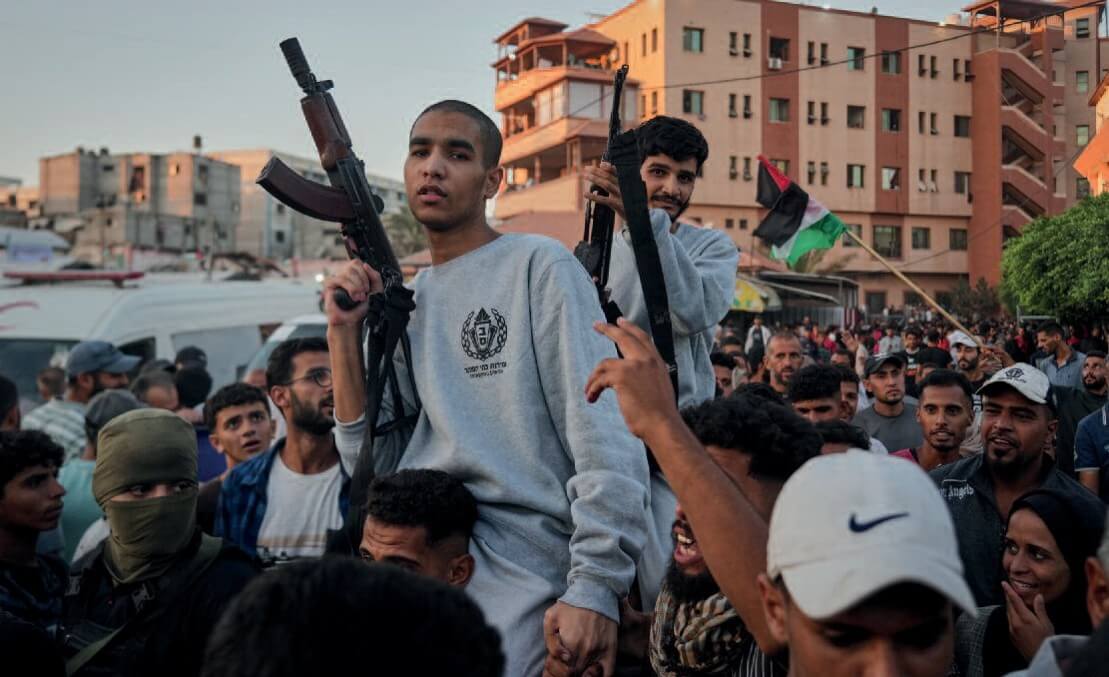
Freed Palestinian prisoners carry rifles as they arrive in the Gaza Strip following their release from Israeli jails, following a ceasefire agreement between Hamas and Israel, outside Nasser Hospital in Khan Younis, southern Gaza Strip,October 13, 2025.
Despite the above, the new horizon president Trump helped create is a remarkable turnaround from what the Middle East looked like as the October 7 war unfolded.
That the agreement reflects a new Pax Americana built on Israel’s victory is evident from its contents. It meets Israel’s war objectives in full: the return of Israeli hostages; Hamas’ full disarmament; and a geopolitical horizon of diplomatic and economic normalization with the Arab and Muslim worlds. The stipulation that Hamas must disarm and not have any future role in Gaza’s governance, alongside the need for the Palestinian Authority to reform, not only satisfies Israel’s demands but it now enjoys the formal backing of the most influential regimes in the Arab and Islamic world. All these countries have essentially come out endorsing a two-state solution where a future Palestinian state would be demilitarized, under international supervision, and fully aligned with the West and its moderate regional allies. Such political arrangement would emerge hand in hand with the full political and economic integration of Israel into a regional security architecture that isolates Iran and its proxies. In the interim, Israel retains control of the majority of the Gaza Strip and the power and latitude to respond to cease-fire violations (it already has done so twice since the ceasefire came into force); and a monitoring mechanism manned by US and other western military personnel is already in place, which can give Israel the needed support for its response to such violations.
To understand what Israel achieved on the battle-field and America through diplomacy it is important to realize what the Middle East landscape was on or about October 7, 2023, the day Hamas broke into Israel, mas-sacred over 1,200 people and took 250 hostages back into Gaza.
The region lived under the shadow of a resurgent Iran and its axis of resistance, an alliance of militias, terror groups, and regimes that rejected Israel’s existence and America’s influence and sought to destabilize and undermine moderate Arab regimes. The axis fueled violence across the region in its effort to increase Iranian dominance, while the West failed to blunt Iran’s nu-clear ambitions through sanctions and diplomacy.
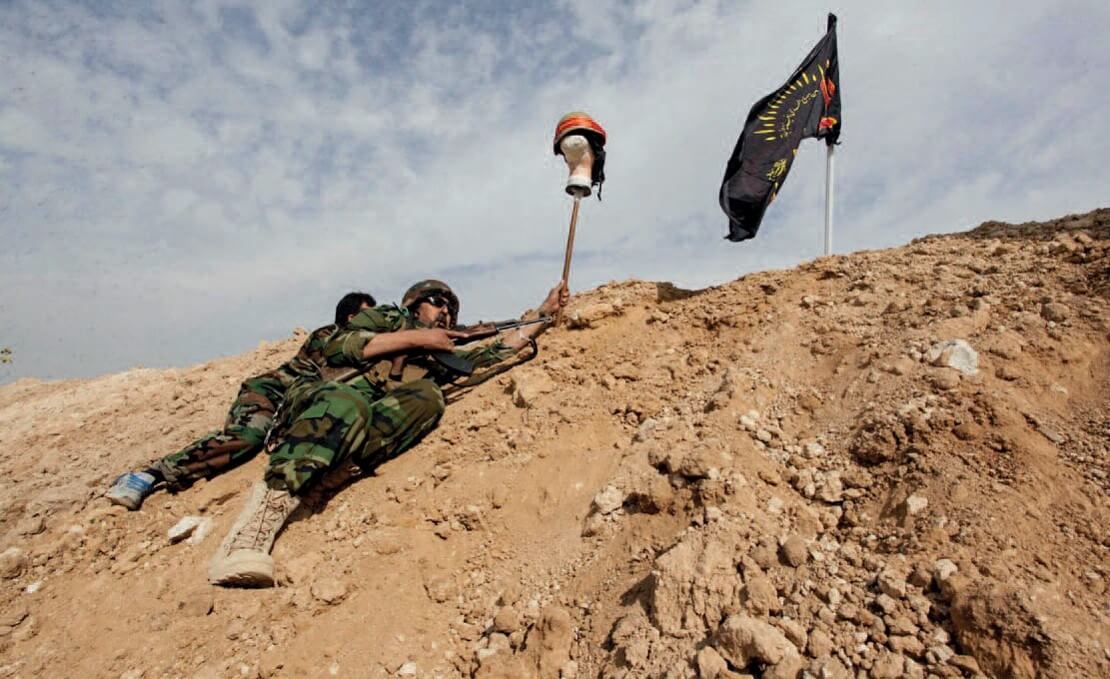
Pro Iran Shia militias loyal to Assad
Iran and its allies sought to undermine the Abra-ham accords, President Trump’s first term signature policy, as they opposed any further progress on the Arab Israeli peace track and fueled conflict across the region. The axis protected the regime of Bashar El As-sad in Syria, which emerged victorious in that country’s civil war and was on its way to being reintegrated into the Arab regional structure. It cemented Hezbollah’s role as the power behind the throne in Lebanon and ensured the Shi’a terror group would remain armed to its teeth for any future confrontation against Israel. It kept Yemen divided, with the Houthis in firm control of large parts of the country to threaten their Sunni neighbors. And it conditioned politics in Iraq through the pro-Iran Shi’a militias that Tehran bankrolled, armed, and trained. In addition, the axis supported both Hamas and the Palestinian Islamic Jihad, while seeking to build terror networks in the West Bank.
The October 7 war aimed to seal the axis regional dominance by destroying Israel. The plan did not pan out, chiefly because Hamas did not disclose the timing of its operation to its allies in advance. Left out of the initial action, neither Tehran nor its proxies chose to fully join the conflict, in part because then US president Biden ordered the quick deployment of a strong naval deterrence in the Eastern Mediterranean. They did turn up the heat, however enough to create enormous pressure on Israel while increasing regional volatility. The Houthis, especially, managed to disrupt maritime commercial shipping through the Red Sea – a serious strain to the global economy and a massive blow to Egypt in particular, whose revenues significantly de-pend on transit fees through the Suez Canal. Yet even though limited, the Axis’ actions and the fear of a second invasion from the north put Israel in its tightest spot since the 1973 war when Egypt launched a surprise attack across the Suez Canal. Israel’s deterrence suffered a serious blow, and for months, the country had to evacuate tens of thousands of citizens from the south and the north to protect them from the risk of further break-ins from hostile forces.
Not only was Israel at a loss because of the horrific events of October 7. As soon as it launched its military response, Jerusalem found itself under growing international pressure to limit or halt its operations, and its allies grew increasingly uneasy. Pressure on weapons supplies, for example, allowed the Biden administration to seek micromanagement of Israel’s war. Israel’s partial reliance on allies for its own defense during two unprecedented rounds of direct confrontation with Iran, in April and October 2024, also limited the ex-tent of Israel’s retaliation. Finally, Israel’s response considerably cooled off budding relations with the Arab world, putting the entire Abraham accords’ framework at risk.
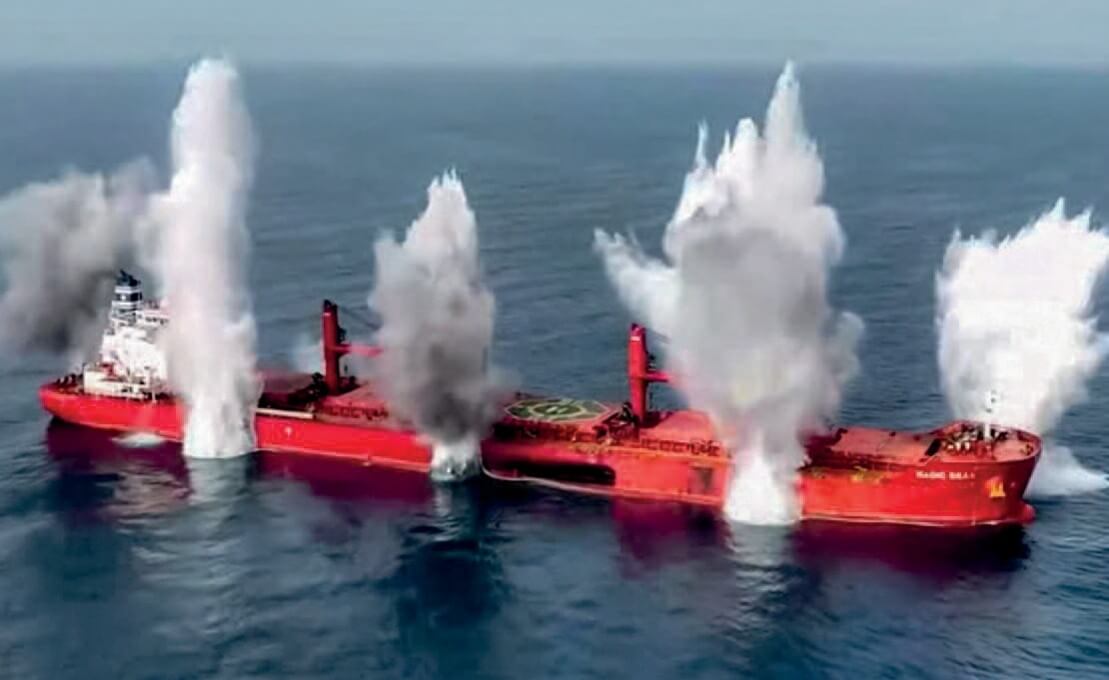
A Greek merchant ship captured and sunk by Houthis in the Red Sea
This set of circumstances, in the past, would have likely led to a brokered ceasefire that essentially re-turned Hamas to the status quo ante of controlling the Gaza Strip and being able to quickly recover any losses incurred in a limited conflict with Israel. This had happened multiple times, in 2009, 2012, 2014, 2018, and 2021.
Israel, however, took a different view this time. It was prepared to incur the wrath of the international community and pay whatever cost to change the equation Hamas had imposed on Israel on October 7. There would be no return to the status quo ante. And in the following 24 months Israel turned the tables on the Iranian axis, even as the normalization process under way with Saudi Arabia and other Arab countries was halted and Israel’s international standing was severely eroded. Israel slowly demolished every building block of the Iranian axis, first gradually, and then, as political and military circumstances allowed it, with knock out punches.
Though the turning point in the war appears now to have been the two-month escalation against Hezbollah between mid-September – with the pagers’ operation – and early December, when a ceasefire was declared, Israel methodically prepared the ground for nearly a year. It systematically eliminated senior commanders and mid-level operatives in South Lebanon starting October 8, 2023. It also destroyed logistical and storage centers across Lebanon and Syria, in the process also slowly opening an air corridor over Syrian skies that would grant safe passage to its aircraft in a future operation against Iran – which eventually came in June 2025. But not before destroying any remnant of threatening equipment left behind by the Syrian regime, which also fell, partially because of Israel’s onslaught against Hezbollah in Lebanon and Iranian infrastructure in Syria. Similarly, Israel’s increasingly daring raids against Houthi installations and leadership in Yemen, its strikes against anti-aircraft defenses in Iran, and the elimination of key leadership in Lebanon, Iran, and Gaza, slowly weakened its enemies and showed Israel’s unparalleled military and intelligence capabilities.
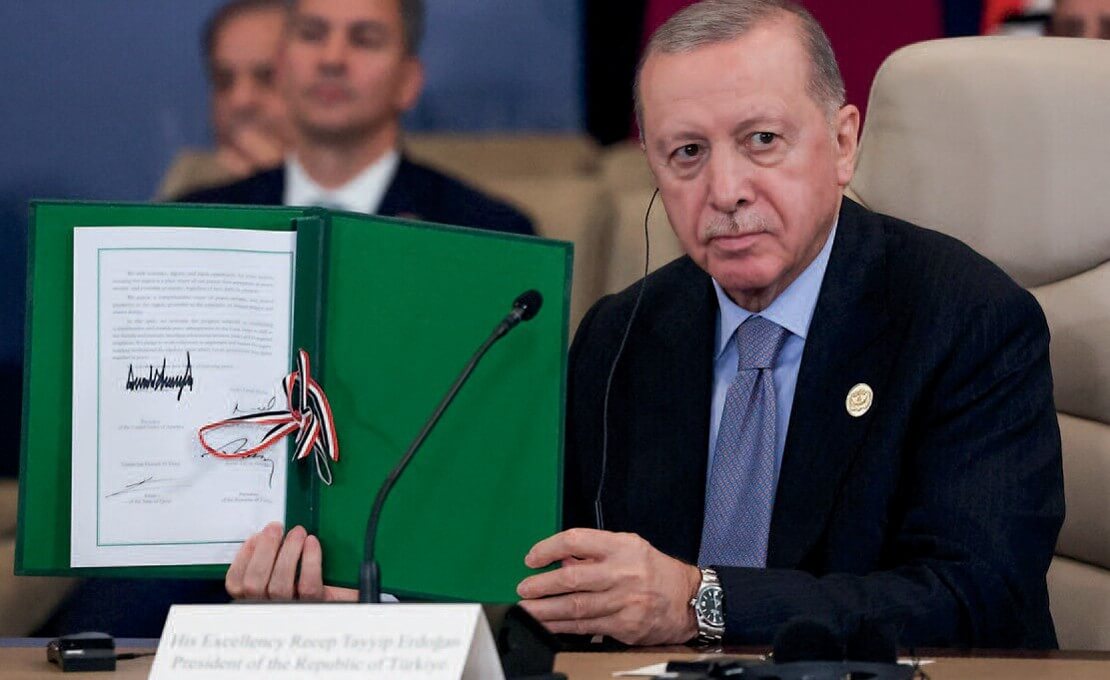
Turkish president Recep Tayyip Erdoğan holds up the signed Peace plan in Gaza, October 13, 2025
These capabilities became a game changer during the 12-day war in June 2025, when Israel inflicted serious, potentially irreparable damage to critical nu-clear infrastructure deep inside Iran, also paving the way to the decision by President Trump to join the war and blow-up nuclear facilities buried deep underground inside Iran.
At each stage of the conflict, Israel crossed what were previously considered red lines and came out virtually unscathed. It showed ingenuity, daring, precision, superior intelligence, and a ruthlessness in executing its operations that left the region speechless and Iranian leaders scrambling. Their assets in Lebanon, Syria, Gaza, and Yemen were all decimated and largely cut down to size. What must have seemed like an unstoppable march for Iran prior to October 7 was now a terrible setback. For the first time in decades, Iran was no longer able to rule Lebanon, deliver weapons and funds to its proxies. Their chain of command and their top leadership were dead. Iran was hit – something that the axis was developed to prevent – and penetrated in such a way that its most strategic assets and its most senior leadership were vulnerable.
President Trump was able to capitalize on all this at the right moment, when Israeli forces were closing in on Gaza City, the last stronghold of Hamas, and after Iran’s proxies had suffered a heavy blow. It was Trump who made those achievements possible: by continuing to supply Israel with weapons; by refusing to micro-manage Israel’s military campaigns; by greenlighting its attack on Iran; by ensuring Israel had diplomatic cover; and by crowning its military achievements through direct, decisive intervention. Though it remains to be seen if US strikes in Iran were as devastating as the president has asserted, US direct military involvement against Iran is another line crossed and another precedent established to restore Western deterrence. For two decades, every US president has said that the US had all options on the table to prevent a nuclear Iran, but then went on to rely on diplomacy and sanctions alone to blunt Iran’s nuclear ambitions. President Trump showed he meant those words, changing the region and restoring American credibility before its allies. The systematic demolition of the Iranian axis, of course, is not the end of the story. Iran’s retreat is real but temporary – Tehran will seek to reassert itself, and a second round is likely to happen before long. It also creates a void, which others will seek to fill. Syria’s transition remains chaotic and tenuous, with Turkey seeking to take up the role Iran had with Assad. Qatar has emerged as a winner in the crisis triggered on October 7 by an Iranian proxy that Qatar has itself coddled. Doha, unlike Iran, has no imperial ambitions in the traditional sense, being a ministate without mil-lions of men in uniform to form a conquering armada. What it cannot conquer with invading armies it seeks to buy through billions of investments. Regardless, Doha, like Turkey, is a sponsor of the Muslim Brother-hood, and it aspires to spread its Islamist brand far beyond its borders. With Iran diminished, both Doha and Ankara will seek to rise as a new regional alliance of Islamists intent on competing with their more moderate Gulf counterparts. Syria and Gaza may well be the terrains where that new competition plays out. Be-sides, the ferocity of Israel’s response to a complex set of existential threats, and its consequent crossing of every red line previously accepted in the region has unsettled Israel’s new regional friends and those who, prior to October 7, were considering joining the Abra-ham accords. President Trump was able to exploit this new situation – Israel’s bulldozing its way to victory, Iranian disarray, Arab discomfort with an Israel too powerful and unhinged to stop – to create the conditions for his peace plan, especially after Israel’s botched attack on Hamas’ headquarters in Doha.
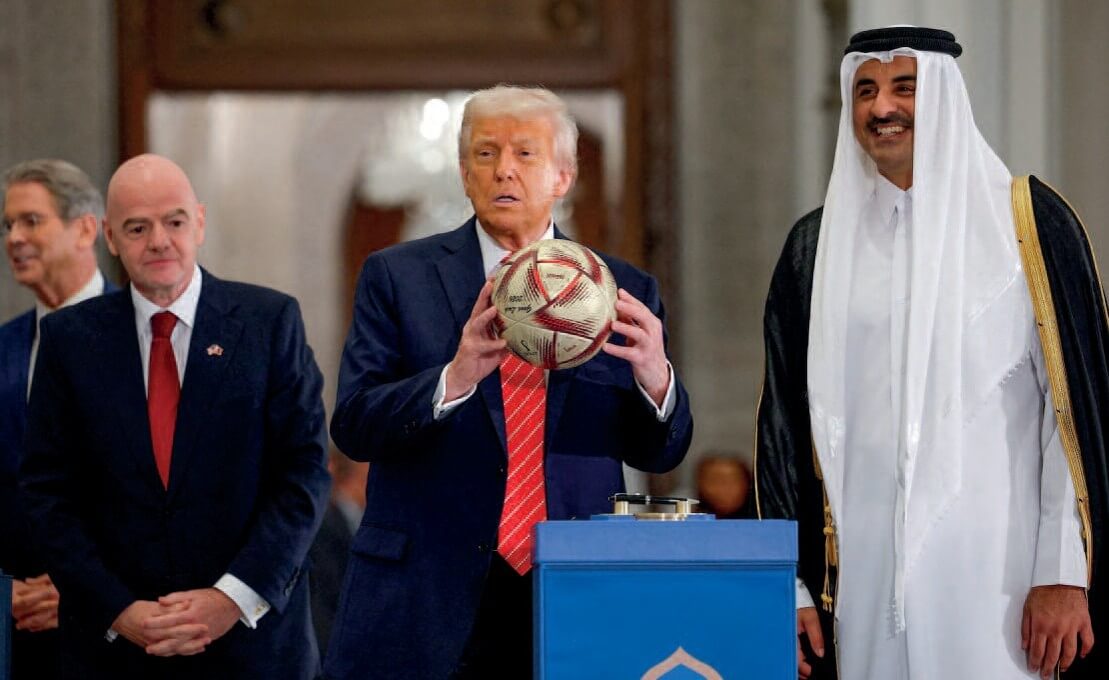
President Donald Trump holds a soccer ball as he attends an event with Qatar’s Emir Tamim bin Hamad Al Thani and FIFA President Gianni Infantino at Lusail Palace in Lusail, Qatar, May 14, 2025.
By first unleashing Israel and then playing the role of the only one that could stop it, Trump became the indispensable broker. By shielding Israel from pressure and isolation, he made it clear that the only acceptable outcome for the conflict was one where Israel’s enemies were defeated. This show of steely resolve, alongside Is-rael’s remarkable military accomplishments, is what delivered the Gaza deal. Whether it can now carry the region beyond a long ceasefire remains to be seen. But in and of itself, this is already a remarkable accom-plishment.
About the Author
Dr. Emanuele Ottolenghi
Dr. Emanuele Ottolenghi is a Senior Research Fellow at CENTEF and Senior Advisor to 240 Analytics, an OSINT platform for risk mitigation in the field of terror financing.
